The Falling Dollar, Brazil’s IOF Crisis, and the Market Reaction: What’s Behind the Economic Swings?
Anúncios
The Dollar and the Ibovespa: How the IOF Crisis, Moody’s, and Tariffs Are Affecting Brazil’s Financial Market
Brazil’s financial market is going through significant fluctuations, driven by a range of external and domestic factors.
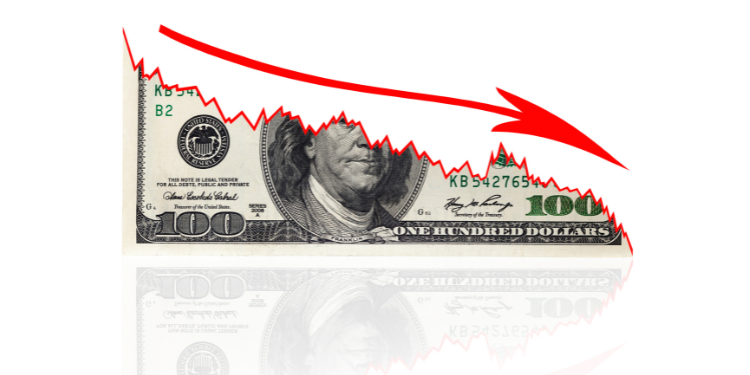
On Monday morning, the dollar was trading down 0.69%, quoted at 5.6784 reais.
Anúncios
Ibovespa, Brazil’s main stock index, was up 0,79%, reaching 138,113 points.
These swings in the currency and stock markets reflect a series of events involving domestic fiscal deadlocks, such as the IOF tax increase and decisions by credit rating agency Moody’s on Brazil’s credit rating , as well as developments on the international stage, especially the tariffs imposed by President Donald Trump.
In this article, we explain how these events have been shaping the financial market and how they affect both the dollar and the Brazilian economy at a time of global uncertainty. 🌍
Anúncios
The Financial Operations Tax (IOF) — The Fiscal Crisis and Its Effects
| 📅 Date | 📰 Context | 📊 Impact |
|---|---|---|
| May 2025 | Announcement of the IOF increase as a measure to raise government revenue and address the fiscal crisis. | Higher costs for transactions such as currency exchange, loans, and financing, affecting both businesses and consumers. |
Brazil’s federal government has faced strong pressure to reverse the IOF increase, especially due to the negative reaction from the market and from sectors of the economy that depend on currency exchange and financial transactions.
President Lula met with Finance Minister, Fernando Haddad, to discuss possible adjustments to the measure, after Congress pushed to overturn the decision by the government.
The Government Backs Down and Looks for IOF Alternatives 📉
IOF change was not well received by the market, which led the government to partially back down on implementing the new tax.
In addition, Brazil’s National Congress began a move to overturn the presidential decree on the IOF increase, something that hasn’t happened in more than 25 years.
In an interview on Monday (the 2nd), Fernando Haddad said that solving the fiscal problem will require adjustments that must be addressed together with structural reforms— that is, long-term changes to the rules of the tax system and to public spending.
He stressed that, to meet the 2025 fiscal targets, IOF regulation needs to be adjusted alongside structural reforms to ensure the stability of public finances.
According to the minister, these reforms have to be complementary, since fiscal changes can’t be made in isolation.
Moody’s Revision of Brazil’s Credit Rating: The Impact on the Financial Market 📉
Another relevant factor for the financial market was the revision of Brazil’s credit rating by credit rating agency Moody’s. On May 30, 2025, Moody’s downgraded the outlook on the credit rating of the country from “positive” to “stable”.
Although Brazil’s sovereign rating was kept at Ba1 (one notch below investment grade), the outlook revision reflected the government’s fiscal difficulties and the deterioration in its ability to pay the public debt.
Moody’s cited rigid public spending, slow progress on fiscal reforms and the sensitivity of public debt to fluctuations in interest rates and inflation as the main factors behind the rating revision.
The agency also mentioned the government’s difficulty in reducing public debt and a lack of fiscal credibility as factors limiting the country’s economic growth.
This raised concerns in the financial market, directly affecting investor confidence in Brazil.
In response, Brazil’s Ministry of Finance reaffirmed its commitment to continuous fiscal improvement and deepening structural reforms, which are essential to ensure sustainable economic growth and balanced public finances over the long term.
Tariffs Back and Forth: How Trump’s Decisions Affect Global and Brazilian Markets 🌐
On the international front, the market is also watching the tariffs imposed by the United States, particularly by President Donald Trump, who has adopted an aggressive trade policy toward several economies, including China.
Last week, the market got temporary relief when the Court of International Trade blocked most of the tariffs imposed by Trump.
However, the decision was quickly reversed when the U.S. Court of Appeals for the Federal Circuit accepted the president’s appeal and reinstated the tariffs.
Trump also announced his intention to double tariffs on imported steel, raising them from 25% to 50%, and accused China of violating the tariff agreement, which triggered a new escalation in trade tensions between the two powers.
In response, China’s Ministry of Commerce said Trump’s accusations were unfounded and promised to take forceful measures to protect its interests, further fueling fears of a trade war between the United States and China.
The Impact of Tariffs on the Global Economy and Brazilian Companies 📊
Rising tariffs and global trade disputes have sparked fears about inflation and higher production costs, especially for Brazilian companies that rely on imported inputs.
Imposing tariffs on products from more than 180 countries could directly affect the prices of final products, reduce consumption and even trigger a global economic slowdown.
In Brazil, this situation could lead to higher prices for products that depend on imports and hurt consumers’ purchasing power.
In addition, uncertainty about the future of tariffs could make planning harder for Brazilian companies, which will have to adapt to new international trade conditions.
Conclusion: What to Expect from Brazilian and Global Markets in the Coming Months?📈
The Brazilian and global financial markets are going through a series of changes and challenges.
In Brazil, fiscal deadlocks and the credit rating outlook revision by Moody’s have heightened investor concerns, while the government tries to balance fiscal adjustments with the implementation of structural reforms.
The IOF increase, which sparked controversy, and the U.S.-China trade war are just some of the external factors that have been putting pressure on the market and creating a climate of uncertainty.
However, with the necessary structural reforms and fiscal adjustments, Brazil still has growth potential to tap into, especially if the reforms prove effective.
As the dollar continues to fluctuate and the Ibovespa responds to domestic and external pressures, it will be essential for the government and businesses to adapt to the new economic realities to ensure a stable future and sustainable growth.
The global financial market remains on alert, and the coming months will be decisive in understanding how fiscal decisions, trade tariffs and economic reforms will shape the future of the Brazilian economy. 🌎