Dynamic Pricing: Maximize E-commerce Profits by 2026

Anúncios
Dynamic Pricing: Increase Your Profit Margin by 10% in the Digital Market in 2026
In the competitive, ever-evolving e-commerce landscape, the search for differentiators and better results never stops. One of the most powerful and underused strategies for achieving significant profit margin growth is e-commerce dynamic pricing. This detailed article explores how the smart adoption of dynamic pricing systems can boost your business, with the ambitious goal of increasing your profit margin by 10% by 2026.
Anúncios
Today’s market, with its regional differences, economic fluctuations and increasingly demanding, connected consumers, requires agility and adaptability from businesses. Static pricing, based on costs and a fixed margin, simply isn’t enough anymore to capture the full revenue potential. The ability to adjust prices in real time, responding to countless variables, is the new gold standard for profitability.
What Is Dynamic Pricing and Why Is It Essential for E-commerce?
The strategy of e-commerce dynamic pricing, also known as real-time pricing or surge pricing, is a strategy in which the prices of products or services are constantly adjusted based on algorithms and real-time data. Unlike traditional pricing, which sets a price and keeps it for a long period, dynamic pricing reacts to factors like demand, supply, competitor prices, consumer behavior, inventory, seasonality, time of day and even weather data.
Anúncios
For U.S. e-commerce, the relevance of dynamic pricing is even greater. The country’s economic and cultural diversity directly affects consumers’ purchasing power and preferences in different regions. In addition, inflation, currency fluctuations and intense online competition require businesses to be extremely flexible in their pricing strategies.
Implementing e-commerce dynamic pricing means not just reacting to the market but also anticipating trends and creating opportunities. Imagine being able to raise your prices during peak demand for a specific product without losing sales, or lowering them slightly to clear slow-moving inventory before it becomes a loss. This flexibility is the key to optimizing every transaction and, as a result, your overall profit margin.
Undeniable Benefits of Dynamic Pricing
- Revenue Maximization: By adjusting prices according to demand and customers’ willingness to pay, you make sure you’re always selling at the ideal price and not missing revenue opportunities.
- Higher Profit Margin: Price optimization leads directly to better margins, since every sale is made at the most profitable point possible.
- Improved Competitiveness: Track and respond to competitor prices in real time, staying competitive without sacrificing profitability.
- Efficient Inventory Management: Use pricing to speed up sales of overstocked products or to manage demand for high-demand items.
- Better Customer Experience (in Some Cases): Strategic discounts can attract new customers or encourage repeat purchases, while fair, transparent prices (even dynamic ones) can build trust.
- Data Collection and Analysis: Implementing e-commerce dynamic pricing systems generates a huge amount of valuable data on consumer behavior and market performance, which can be used to refine your strategies even further.
How Dynamic Pricing Works: The Pillars of the Strategy
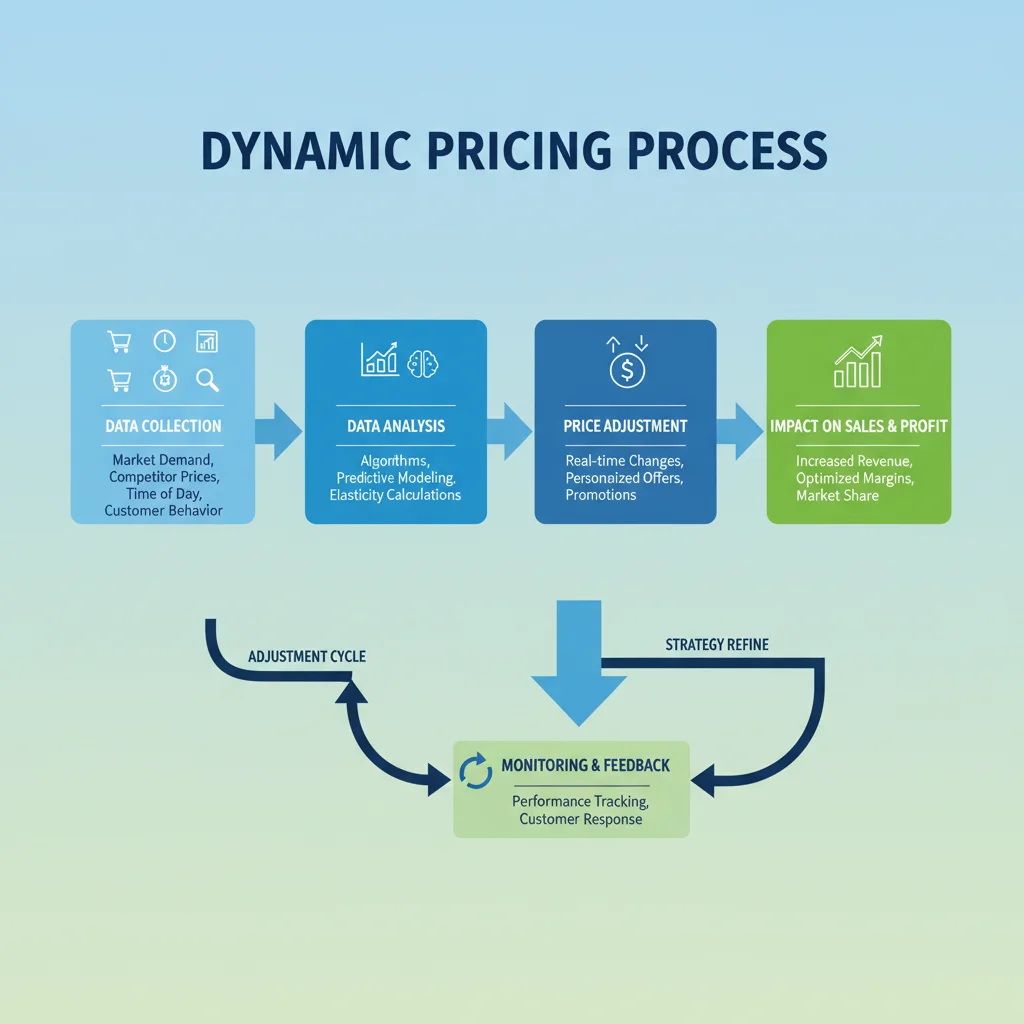
Effective implementation of e-commerce dynamic pricing depends on a combination of technology, data and a deep understanding of your market. The fundamental pillars include:
1. Comprehensive Data Collection and Analysis
Data is the heart of dynamic pricing. It’s essential to collect and analyze a wide range of information, including:
- Internal Data: Sales history, profit margins by product, inventory levels, customer acquisition costs, operating costs.
- Market Data: Competitor prices (constant monitoring), market trends, seasonality, special events, holidays.
- Consumer Data: On-site browsing behavior, purchase history, customer segmentation, price sensitivity, geolocation.
- External Data: Inflation, exchange rates, economic indicators, weather conditions (for certain products).
The ability to integrate and process this data in real time is what sets dynamic pricing apart. Business Intelligence (BI) tools and advanced e-commerce platforms are crucial here.
2. Pricing Algorithms and Models
With data in hand, complex algorithms go to work processing it and suggesting (or automatically applying) price adjustments. These algorithms can be based on:
- Predefined Rules: For example, ‘if inventory of A falls below X units, raise the price by Y%.’
- Machine Learning: Algorithms that learn over time, identifying patterns and predicting market and consumer behavior to optimize prices.
- Price Elasticity: Models that calculate how sensitive demand for a product is to changes in its price.
- Revenue Optimization: Focused on finding the price point that maximizes total revenue, considering quantity sold and unit price.
3. Real-Time Monitoring and Adjustments
The beauty of e-commerce dynamic pricing lies in its capacity for continuous adaptation. Prices are constantly monitored and adjusted, often every hour or even more frequently, to respond to new information. That could include a new competitor entering with lower prices, an unexpected spike in demand or a change in inventory conditions.
Dynamic Pricing Strategies for Your Market
For online retailers, a few e-commerce dynamic pricing strategies stand out:
1. Competitor-Based Pricing
Monitor your main competitors’ prices in real time and adjust yours to be more competitive. You can choose to be the cheapest, match their prices or position yourself slightly above them, justifying it with added value. Price intelligence tools are indispensable here.
2. Demand-Based Pricing
Raise prices when demand for a product is high and lower them when demand is low. This is common in sectors like travel and events, but it can be applied to any product with fluctuating demand. For example, fans in summer or coats in winter.
3. Inventory-Based Pricing
Use pricing to manage your inventory levels. Lower prices to clear slow-moving products or those nearing their expiration date. Raise prices for products with limited stock and high demand, maximizing profit per unit.
4. Customer Segment Pricing
Offer different prices to different customer segments. This can be based on purchase history, loyalty, location or even the device used to access the store. For example, an exclusive discount for first-time buyers or loyalty program members.
5. Time and Seasonal Pricing
Adjust prices by day of the week, time of day, holidays, special dates (Black Friday, Mother’s Day, Christmas) or season. Seasonal products benefit enormously from this approach.
6. Geotargeted Pricing
In the U.S., with its regional differences in purchasing power and cost of living, geotargeting can be a powerful tool. Offer different prices to consumers in different states or cities, taking into account shipping costs and local price sensitivity.
Challenges and Considerations When Implementing Dynamic Pricing
Although e-commerce dynamic pricing offers enormous potential, implementing it isn’t without challenges:
1. Technological and Data Complexity
The need to collect, process and analyze large volumes of data in real time requires investment in technology and data science expertise. Integration with e-commerce platforms, ERPs and CRM systems can be complex.
2. Customer Perception
Consumers may react negatively to constantly changing prices, especially if they feel they’re being exploited. Transparency and clear communication about why prices fluctuate (for example, ‘today’s special price,’ ‘flash sale’) are crucial. Avoid drastic, frequent changes that could breed distrust.
3. Legislation and Regulation
It’s essential to stay on top of consumer protection laws. Practices like ‘predatory pricing’ or price discrimination without clear justification may be challenged legally. Consult experts to ensure compliance.
4. Learning and Adjustment Curve
Implementing e-commerce dynamic pricing is an ongoing process of learning and optimization. It requires A/B testing, constant monitoring and fine-tuning of algorithms to find the best strategy for each product and segment.
5. Upfront Investment
Dynamic pricing tools and platforms can represent a significant upfront investment. However, the return on investment (ROI) tends to be very high when they’re implemented well.

Dynamic Pricing Tools and Technologies
To implement e-commerce dynamic pricing effectively, you’ll need robust tools:
- Dynamic Pricing Platforms: Specialized software that collects data, applies algorithms and adjusts prices automatically. Examples include smart repricers and price optimization software.
- Competitor Monitoring Tools (Price Intelligence): Essential for tracking competitor prices in real time.
- CRM and ERP Systems: To integrate customer, sales and inventory data, providing a 360-degree view of the business.
- Data Analysis (BI) Platforms: To visualize and interpret the data generated, identifying trends and opportunities.
- Integration APIs: To connect all these tools and ensure a continuous, automated data flow.
Toward a 10% Increase in Profit Margin by 2026
Achieving a 10% increase in profit margin by 2026 through e-commerce dynamic pricing is an ambitious goal but entirely attainable for businesses that commit to this strategy. To make this goal a reality, consider the following steps:
1. Start Small, Think Big
Don’t try to apply dynamic pricing to your entire product catalog at once. Start with a select group of high-demand products or those with greater price elasticity. Test different strategies and monitor the results closely. As you gain experience and confidence, expand to other products.
2. Invest in Training and Technology
Train your team on the fundamentals of dynamic pricing and the tools that will be used. Consider hiring or consulting data science and e-commerce experts. Investing in a robust platform will be crucial for automation and the strategy’s effectiveness.
3. Keep the Customer at the Center
Although the goal is to maximize profit, never lose sight of the customer experience. Fair prices, transparent communication and perceived value are essential for building long-term loyalty. Avoid strategies that could be seen as unfair or cause frustration.
4. Monitor and Optimize Constantly
Dynamic pricing isn’t a ‘set it and forget it’ solution. The market is constantly changing, and so should your strategies. Regularly review your data, adjust your algorithms and be open to trying new approaches. Data analysis should be an ongoing process.
5. Integrate With Other Marketing Strategies
The strategy of e-commerce dynamic pricing works even better when integrated with your marketing and sales campaigns. For example, use pricing data to inform promotions, segmented email marketing campaigns or targeted paid ads , amplifying the impact of each price adjustment.
Conclusion
The strategy of e-commerce dynamic pricing represents one of the biggest opportunities for growth and profitability in the digital market. By embracing technology, data analysis and a strategic, flexible approach, your business can not only survive but thrive in a competitive environment.
The goal of increasing your profit margin by 10% by 2026 reflects the transformative power of this methodology. It’s not just about changing prices but about understanding the real value of your products at every moment, for every customer, and acting proactively to capture that value. Start your journey today and position your online store at the forefront of innovation and profitability.