Digital Marketing Trends 2026: Grow 15% With New Platforms
Anúncios
Digital Marketing Trends for 2026: Get Ready for 15% Growth in Your Audience Reach With New Platforms and Formats
The landscape of digital marketing is constantly changing, and projecting the future is essential for any successful strategy. As we approach 2026, new technologies, consumer behaviors and platforms are emerging, reshaping how brands and consumers interact. For companies that want not just to survive but to thrive, understanding and anticipating these changes is crucial. This article dives into the main trends that will shape digital marketing in the coming years, offering a practical guide so your brand can achieve up to 15% growth in audience reach by capitalizing on the opportunities ahead.
Anúncios
With a vast, connected population hungry for what’s new, today’s market is fertile ground for digital innovation. Internet penetration keeps growing, and users are highly engaged on social networks and video platforms. This dynamic landscape requires digital marketing professionals to always stay one step ahead, adapting their tactics and exploring new horizons. The trends we’ll cover here aren’t mere predictions; they’re signs of the near future, based on data, technological advances and behavioral changes already observed.
Get ready to dive into a complete overview of the innovations that will transform digital marketing by 2026. We’ll cover everything from generative artificial intelligence to the rise of the metaverse, including hyper-targeted personalization, influencer marketing 2.0 and the growing importance of sustainability and brand purpose. Our goal is to provide actionable insights so you can optimize your campaigns, engage your audience more effectively and, ultimately, drive business growth in an increasingly competitive market.
Anúncios
Generative Artificial Intelligence and Creative Automation in Digital Marketing
Artificial Intelligence (AI) is nothing new in digital marketing, but generative AI is taking the game to a whole new level. In 2026, we’ll see a proliferation of tools capable of creating text, image, audio and video content autonomously and at scale. This means mass personalization will become more accessible and effective, allowing brands to produce campaign variations for different audience segments with unprecedented speed.
Generative AI will impact several areas of digital marketing:
- Content Creation: Tools like GPT-4 and DALL-E already show the ability to generate articles, social media posts, video scripts and even graphic design pieces. By 2026, this technology will be more refined, integrated and accessible, allowing small and midsize businesses to compete with big players in producing high-quality content.
- Personalization at Scale: The ability to generate thousands of variations of the same ad, adapting language, images and calls to action for each audience micro-segment, will be a competitive advantage. This will optimize conversion rates and improve the user experience, making communication more relevant.
- Campaign Optimization: AI algorithms will analyze data in real time to optimize bids, targeting and budget allocation, identifying patterns and predicting results with greater accuracy. This will free marketers to focus on more complex and creative strategies.
- Customer Service: Chatbots and virtual assistants powered by generative AI will offer more natural, efficient interactions, capable of solving complex problems and providing personalized support 24/7.
To capitalize on this trend in digital marketing, companies will need to invest in training their teams to operate these tools and develop a clear strategy for integrating generative AI into their workflows. Human oversight will remain crucial to ensure quality, ethics and brand voice.
The Rise of Conversational Commerce and Immersive Experiences
Consumers are looking for convenience and experiences. In 2026, conversational commerce and immersive technologies will be fundamental pillars of digital marketing. Imagine buying a product directly from a chat conversation, or trying on sunglasses virtually before purchasing.
Conversational Commerce: The Store in Your Pocket
Messaging apps are hugely popular. Conversational commerce, which allows buying and selling products and services through chat platforms such as WhatsApp Business, Telegram and even Instagram DMs, is set to explode. Brands that invest in service and sales flows optimized for these channels will see a significant increase in conversions. This includes:
- Smart Chatbots: Able to guide customers through the buying journey, answer questions, present products and complete transactions.
- Integrated Human Support: For more complex cases, a smooth handoff from chatbot to a human agent will be vital to ensure customer satisfaction.
- Integrated Payments: Being able to pay directly in the chat, without redirects, will remove barriers and speed up the buying process.
Augmented Reality (AR) and Virtual Reality (VR): Beyond the Screen
AR and VR will go from niche to mainstream tools in digital marketing. AR, in particular, will be widely used for:
- Product Try-Ons: In sectors like fashion, beauty and home decor, AR will let consumers “try on” products virtually before buying, reducing uncertainty and return rates.
- Interactive Advertising: Ads with AR elements that let users interact with the product or brand in innovative ways.
- Navigation and Guides: Apps that use AR to guide customers through physical stores or events.
VR, meanwhile, will keep evolving, with more accessible and immersive experiences. Companies will be able to create virtual showrooms, 360-degree brand experiences and even corporate events in the metaverse. The barrier to entry for VR is still the cost of equipment, but the trend is toward wider access and adoption.

The Metaverse and Web3: New Horizons for Digital Marketing
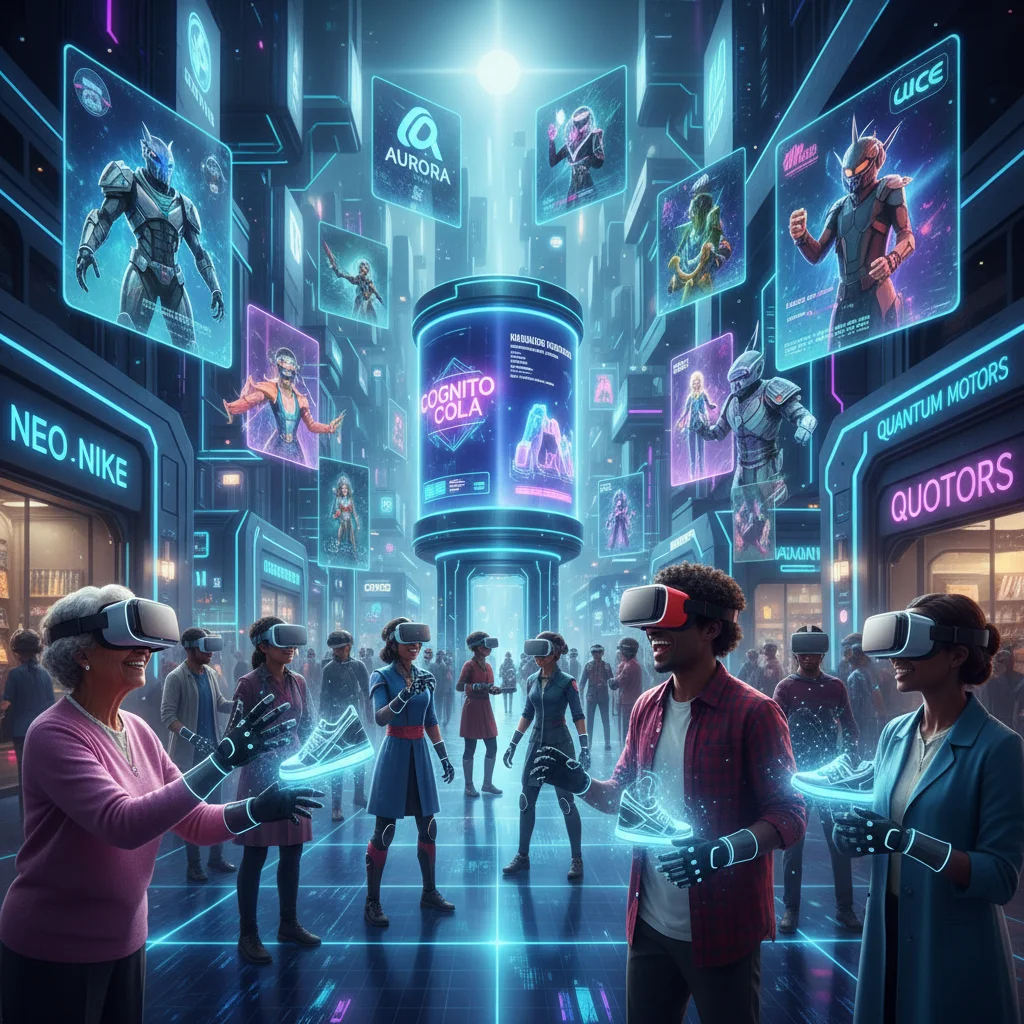
Although still in its early stages, the metaverse and Web3 represent a promising frontier for digital marketing. In 2026, it will no longer be a question of “if” but “how” brands will integrate into these new virtual, decentralized environments.
Metaverse: Presence and Experience in Virtual Worlds
The metaverse isn’t a single environment but a set of interconnected virtual worlds where people can interact, play, work and shop. Opportunities for digital marketing include:
- Immersive Brand Experiences: Creating virtual stores, events, games and interactive experiences where users can engage with the brand in innovative ways.
- Advertising in the Metaverse: Placing ads in virtual environments, sponsoring events or creating branded content that blends naturally into the environment.
- NFTs (Non-Fungible Tokens): Using NFTs as digital collectibles, loyalty programs or even as a way to access exclusive experiences. Fashion and luxury brands are already exploring this path.
- Virtual Economy: Selling digital products and services (skins, avatar accessories, in-game items) that generate revenue and engagement.
The key to success in the metaverse will be authenticity and creating real value for users, instead of simply replicating real-world tactics. Brands will need to understand the culture of each metaverse platform and develop strategies that resonate with its users.
Web3 and Decentralization: Ownership and Trust
Web3, built on blockchain technologies, promises a more decentralized internet where users have greater control over their data and digital assets. For digital marketing, this means:
- Tokenized Loyalty Programs: Rewarding customers with tokens that can be exchanged for products, services or exclusive experiences.
- Decentralized Governance (DAOs): Involving the community in brand decision-making, creating a sense of belonging and loyalty.
- Transparency and Trust: Using blockchain to guarantee product authenticity, the origin of materials and process transparency, something consumers increasingly value.
Although Web3 is still taking its first steps, it’s essential for digital marketing companies to start exploring its possibilities and understanding how this new internet architecture can impact their relationship with customers.
Hyper-Personalization and Customer Experience (CX) as a Competitive Advantage
In a saturated market, customer experience (CX) has become the main battleground. In 2026, hyper-personalization will be the backbone of exceptional CX in digital marketing. It’s not just about calling customers by name, but about anticipating their needs and offering solutions before they even ask.
This will be possible through:
- Advanced Data Analytics: Using Big Data and Machine Learning to collect, process and interpret consumer behavior information in real time. This includes purchase history, site browsing, social media interactions and even location data.
- Dynamic Customer Journeys: Mapping and optimizing customer journeys that adapt in real time based on user actions and preferences.
- Dynamic Content: Websites, emails and ads that automatically adapt to each visitor’s profile and interests. For example, an online store that displays different products on the homepage for each user, based on their browsing and purchase history.
- Predictive Offers and Recommendations: Offering products, services or content the customer is likely to want, even before they search for them.
Hyper-personalization in digital marketing isn’t just about the sale but about building a lasting relationship. Customers who feel understood and valued are more likely to become loyal brand advocates. However, data privacy will remain a central concern, and brands will need to be transparent about how they use customer information, offering control and opt-out options.
Influencer Marketing 2.0: Authenticity and Micro-Influencers
influencer marketing remains a powerful force in digital marketing, but its dynamics are evolving. In 2026, the search for authenticity and the rise of micro- and nano-influencers will be the main trends.
- Focus on Niches and Communities: Big influencers with millions of followers will still have their place, but brands will increasingly seek out micro- and nano-influencers with smaller but highly engaged, targeted communities. The relevance and trust these influencers build with their audiences drive higher conversion rates.
- Content Co-Creation: Collaboration will run deeper, with influencers actively participating in creating products, campaigns and stories. This ensures content is more authentic and resonates better with the audience.
- Transparency and Credibility: Regulation and consumer awareness of undisclosed advertising will drive demand for greater transparency. Influencers and brands will need to be clear about paid partnerships, keeping credibility a priority.
- More Sophisticated ROI Measurement: Vanity metrics will give way to deeper analysis of the real impact of influencer campaigns in digital marketing, focusing on sales, leads and qualified engagement.
For brands, this means rethinking influencer strategies, seeking more strategic, long-term partnerships based on shared values and authenticity. AI tools to identify ideal influencers and analyze campaign performance will become indispensable.
Sustainability and Brand Purpose: The New Imperative
Consumers are increasingly aware of and demanding about companies’ environmental, social and governance (ESG) practices. In 2026, having a clear brand purpose and showing a genuine commitment to sustainability will no longer be a differentiator but a basic requirement for success in digital marketing.
- Transparent Communication: Brands will need to communicate their sustainability initiatives clearly, honestly and verifiably. Greenwashing (fake sustainability) will be quickly spotted and penalized by consumers.
- Cause Marketing: Associating the brand with relevant social and environmental causes, going beyond simple donations and engaging in concrete, long-term actions.
- Sustainable Products and Services: Demand for eco-friendly, ethical, lower-impact products will keep growing. Digital marketing will play a role in highlighting these attributes and educating consumers.
- Community Engagement: Involving consumers in sustainability initiatives, creating a sense of community and shared purpose.
Brands that manage to integrate sustainability and purpose into their core business and communicate it authentically in their digital marketing strategies will build a deeper connection with their customers, earning loyalty and preference in a competitive market.
Data Privacy and Zero-Party Data: The End of Third-Party Cookies
Data privacy is a growing concern worldwide, with privacy laws such as the CCPA already in force. In 2026, the era of third-party cookies will be in its twilight, forcing companies to rethink how they collect and use data in digital marketing.
The solution will lie in:
- First-Party Data: Data collected directly from the customer’s interactions with the brand (website, app, CRM). This includes purchase history, browsing and sign-up emails. It’s the most valuable and controllable data.
- Zero-Party Data: Data the customer proactively shares with the brand, knowing it will be used to personalize their experience. This can be done through surveys, quizzes, email preferences or profile settings. It’s the most transparent and reliable data.
- Transparency and Consent: Brands will need to be extremely clear about what data they’re collecting and how they’ll use it, and obtain explicit user consent.
- New Tracking Technologies: The tech industry is developing new tracking and targeting solutions that respect user privacy, such as browser privacy APIs and federated identity solutions.
Adapting to this new privacy landscape will be a challenge, but also an opportunity to build greater trust with consumers. Companies that prioritize privacy and invest in first-party and zero-party data collection strategies will have an advantage in digital marketing in 2026.
Conclusion: Preparing Your Brand for the Future of Digital Marketing
The landscape of digital marketing in 2026 will be defined by a fusion of advanced technology, immersive experiences, authenticity and a strong sense of purpose. To achieve the promised 15% growth in audience reach, companies will need to take a proactive, adaptable approach.
The trends discussed – generative AI, conversational commerce and AR/VR, the metaverse and Web3, hyper-personalization, influencer marketing 2.0, sustainability and data privacy – aren’t isolated. They intertwine, creating a complex, dynamic digital ecosystem. Success will come to brands that can integrate these trends cohesively into their strategies, putting the customer at the center of everything they do.
It’s essential to start experimenting and investing in these areas now. Educate your team, explore new tools, test new platforms and, above all, stay alert to changes in consumer behavior. The future of digital marketing is bright for those willing to innovate and adapt. Get ready to build deeper connections, deliver real value and drive significant growth for your brand in the years ahead.